
 LNLAdmin
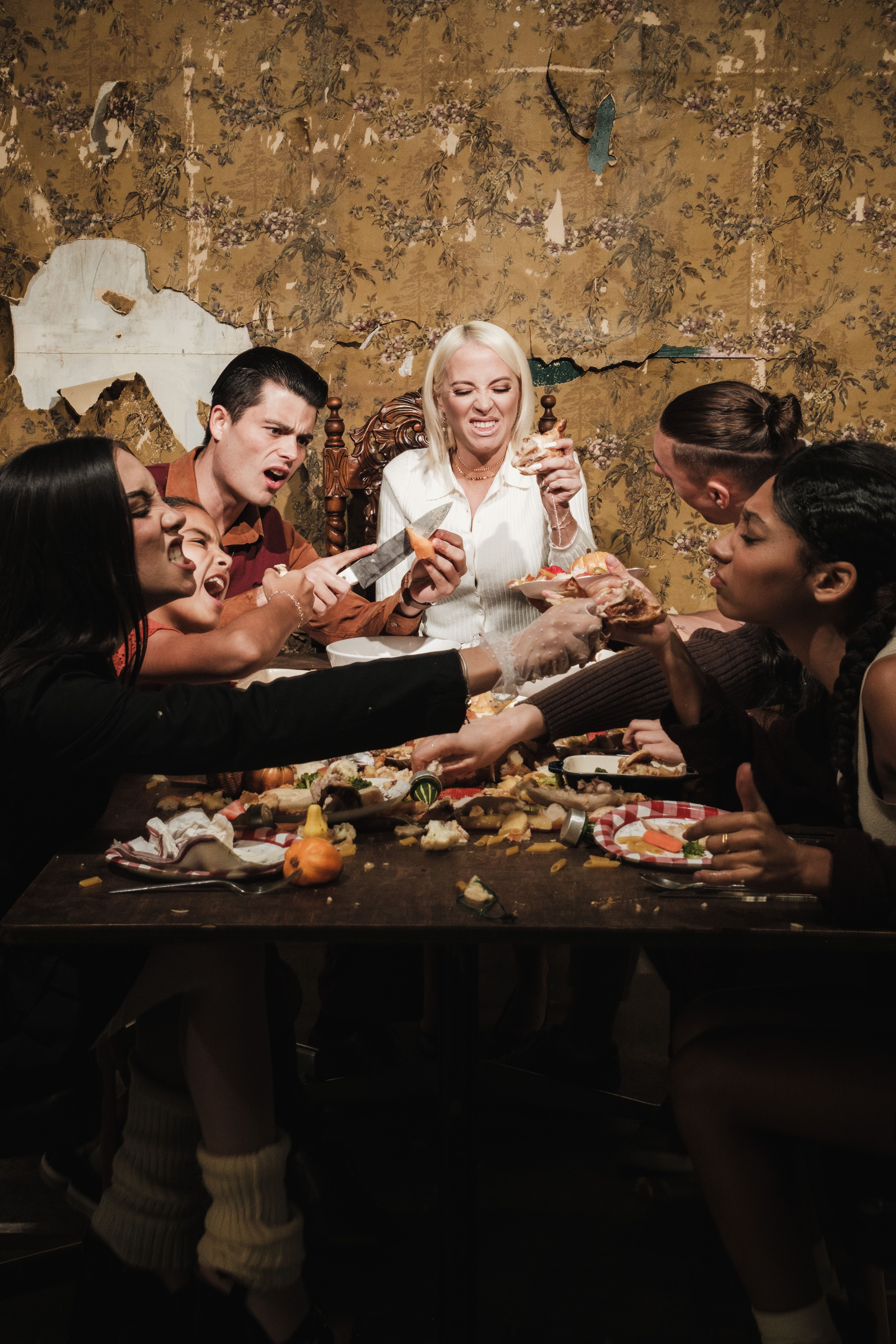
WELCOME TO VIRAL MAXIMALIST FOODIE HELL (I went to Tod’s festive feast so you don’t have to )
Title: WELCOME TO VIRAL MAXIMALIST FOODIE HELL (I went to Tod’s festive feast so you don’t have to)
Berkshire has never looked so deliciously contradictory. On the river’s edge, where we once picnic on silt and listen to swans argue over feathers, the Thames towns still glide in their Sunday best. The fields roll out like a postcard, the hills keep their secrets, and the train to Paddington hisses with the certainty of a future. Yet every postcard has a preface, and Berkshire’s preface lately reads like a queue for the next big thing.
The Hook: Berkshire’s Romantic Fabric, Slightly Torn
If you move fast enough, you can pretend you live in a county where the air smells of damp wool and old money, where the river lap is a metronome for a genteel life. In the best seasons, you can walk to a market that’s older than your grandparents’ jokes, sip a pint at a gastropub that swore it wouldn’t jump on the latest trend, and still catch the 6:20 to London that makes the city feel like an extended commute rather than a complete life. The image is intoxicating: historic lanes, royal parks on the horizon, and a direct line into a heartbeat of central London that seems almost indulgent in its certainty.
But the daily reality arrives with the weather. Berkshire’s glassy surface is being pressed from behind by a new tide: the commuter gold rush, the push-pull of growth and nostalgia, the sense that you can be in two places at once and end up in neither.
The Commuter Gold Rush: Access as the New Anchor
The selling point isn’t a fancy high street, or even a Michelin-starred gastropub. It’s the speed-chord that Stockholm and Singapore learned long ago: the value of being able to cross a county line and suddenly exist in a different time zone of work and life. The Elizabeth Line, the Great Western line, the easy promise of a 30-minute slide into the city means the quiet enclaves of Berkshire aren’t quiet for long. They become living stations—stops on a map where people decide to plant roots because the grindstone called London feels like a light touch, a mere suggestion you can accept or decline.
What follows is a demographic tidal wave disguised as opportunity. Couples, graduates, small business hopefuls, and the dreamers who want to own something tangible in the place their grandparents spoke about—they all arrive with their boxes and their brightness. They buy. They build. They layer shiny new brick over the old brick. The town becomes a mixtape of the old and the new, a place where fairy lights strung across a square can share the night with a solar-paneled development that looks like it belongs in a different decade’s advertisement.
Speed equals aspiration, and aspiration equals demand. The result is a density that Berkshire residents recognize only as something they’ve been warned about in the quiet hours of the night: a map filling in, a horizon narrowing, a sense that you’re watching your own town become a satellite of a metropolis that once seemed merely distant enough to feel safe.
The Local Friction & Environmental Cost: Costly Trade-Offs Under Clear Skies
The upside is irresistible. You wake up and there’s a swan in the garden, or a river you’ve known since childhood reflecting a skyline you’ll never own. The downside, however, is less poetic and more practical. As rents push upward and family homes slip into the hands of buyers who see Berkshire as a convenient postbox on the way to somewhere else, the locals feel the counterweight of progress: their streets are no longer theirs alone.
The price tags on the town’s corners rise in the same breath as traffic lights blink with a new rhythm: the creak of a roundabout that once turned with dependable ease now groans under the weight of delivery vans, school buses, and weekend shoppers who treat the green belt like a suggestion rather than a boundary. The air quality along the A4 and M4 corridors isn’t a statistic; it’s a daily conversation at the bus stop, a scent in the rain that doesn’t wash away with every new development’s glossy brochure.
For the born-and-bred Berkshire family, this isn’t just “gentrification.” It’s a reshaping of a local psyche. The voices that used to speak of river walks and the quiet theatre of a Sunday market now weigh their words against the sound of cranes and the sight of new flats rising like sharp-edged sculptures in the landscape. The struggle is not only about who owns what but about who gets to belong to a place that keeps insisting on being both a sanctuary and a station.
Infrastructure strains aren’t glamorous headlines, but they’re the texture of daily life: schools squeezed for space, doctors’ surgeries with queues that stretch beyond the old clock tower, bus routes that feel more like routine suggestions than reliable arteries. And while the town’s history pours out through its architecture—the Tudor lanes, the medieval market charters, the green spaces that feel timeless—the new residents bring a complicating energy: quick money, quicker decisions, a readiness to treat a town as a canvas for their version of modern life.
The Resolution: A Future That Wants to Be Both
So where does Berkshire go from here? The question isn’t whether this county will keep its river and its markets; that much is stubbornly certain. The question is whether the river will become a moat around a curated lifestyle or a living thread in a fabric that works for more people without tearing at the seams.
There is a path toward balance, and it’s not about halting progress but about guiding it with the old craft of place-making: listen to long-time residents, protect the green belts as if they were a family heirloom, and ensure that newly arriving voices are folded into the town’s story rather than set against it. The hybrid-working era invites a new rhythm—not the frantic, every-last-minute-on-webinars rhythm of London, but a more breathable tempo that respects local life as well as professional demand. Some Berkshire towns already flirt with this balance: smaller-scale developments that respect the topography, transit improvements that reduce the need for constant car trips, and public spaces that feel like they belong to everyone, not just the ones with the newest lease.
There’s a quiet beauty in watching a place become a hybrid: a county that keeps its river routes and royal parks while also hosting pop-up markets, coworking nooks, and late-night eateries that snap a town back to life after a drizzle. The fear, of course, is the loss of something irreplaceable—the sense that a place is simply a stage on which the London story is performed, with Berkshire as a backstage crew member rather than a co-author. If that happens, the town risks becoming a satellite with a scenic route but empty center—a fashionable backdrop with no heart.
So, what’s the future? It’s not a choice between the old Berkshire and the new Berkshire. It’s an invitation to cultivate a Berkshire that can be both: a place where historical lanes still breathe, where a palace of a train timetable is balanced by a timetable of local pride, where the market square retains its character even as it hosts the next big food hall or the next wave of innovative housing. The price of progress is obvious in the streets—the clogged roundabouts, the rising rents, the occasional fog of air quality reports—but the value of progress is equally visible in a county learning to negotiate itself into a more complex, more inclusive, more resilient future.
In the end, Berkshire isn’t a hostage to London; it’s a partner in a shared future. The trick will be keeping that partnership honest: protecting the daylight of the green belt, honoring the stories of the residents who’ve kept the flame alive through decades of change, and encouraging the new voices to help write a Berkshire that feels both familiar and exciting—a place where you can still be in two places at once, and still belong to both.
0 Comment