
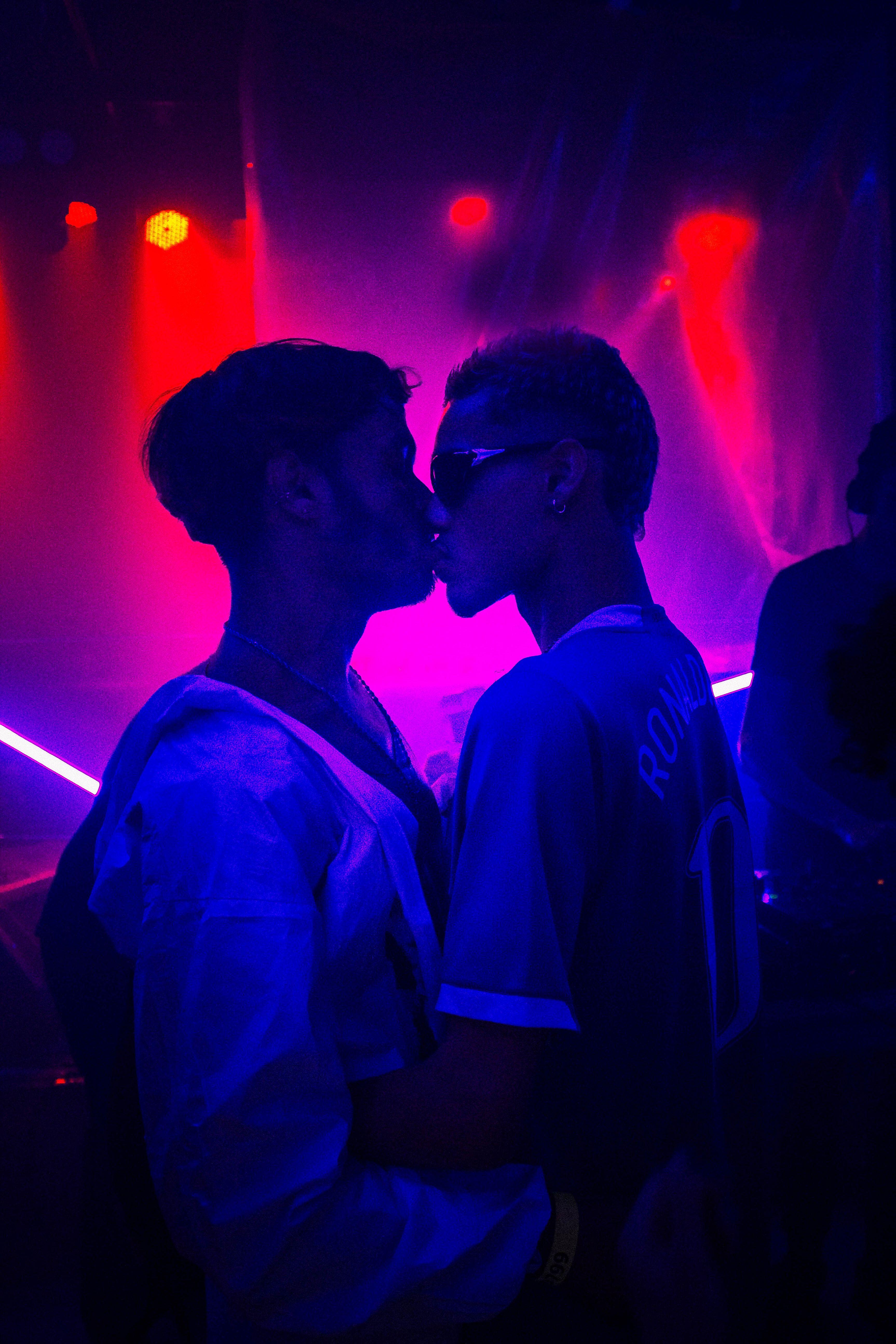
This is an example page. It’s different from a blog post because it will stay in one place and will show up in your site navigation (inTo understand London, you have to understand its dark. When the sun goes down, the capital shifts gears from a city of suits and commuter delays to a sprawling, decentralized playground of absolute subcultural freedom.
Clubbing isn’t just an entertainment industry in London—it’s the city’s creative bloodstream. It is where fashion subcultures are birthed, where sonic genres are forged from raw geography, and where the rigid class systems of Britain get completely obliterated on a sweat-drenched dance floor.
The Hot Spots & The Rumours: A Tour of Sacred Ground
London’s clubbing history is a map of reclaimed spaces: disused railway arches, cold storage meat lockers, abandoned bus depots, and subterranean West End basements.
1. The Blitz (Covent Garden) – The Birth of the New Romantics
In the late 1970s, Steve Strange and Rustie Egan took over a drab Tuesday night at a Soho/Covent Garden wine bar. The rule was simple: total visual outrage.
- The Legend: David Bowie famously walked into The Blitz, surveyed the room of homemade outfits, cyber-punks, and synth-geeks, and immediately hired four regulars (including a young Boy George) to star in his “Ashes to Ashes” music video. If Steve Strange didn’t like your look at the door, he held up a mirror and said, “Have a look at yourself, and ask why I’m not letting you in.”
2. Shoom & The Haçienda’s Southern Echo – The Acid House Explosion (1987–1988)
Held in a tiny, disused fitness center down Southwark Street, Danny Rampling launched Shoom after returning from Ibiza with a handful of ecstasy pills and a stack of Chicago house records.
- The Atmosphere: It held barely 300 people, was perpetually filled with thick smoke machine fog, and hosted an almost spiritual euphoria. People literally brought gifts for strangers on the floor. It triggered the “Second Summer of Love” and fundamentally altered British youth culture overnight.
3. Ministry of Sound (Elephant & Castle) – The American Cathedral (1991)
Inspired by New York’s Paradise Garage, Justin Berkmann opened Ministry in a disused bus depot in south London. It had no alcohol license initially—just pure, unadulterated focus on the music and sound.
- The Sound: They built a sound system so heavy and custom-engineered that the room had to be acoustically isolated. It was built not to get drunk in, but to lose your mind to the low-end frequencies.
4. Fabric (Farringdon) – The Temple of Sound (1999–Present)
Carved inside the Victorian brick arches of the old Metropolitan Cold Stores opposite Smithfield Meat Market, Fabric became the undisputed capital of global electronic music.
- The Bodysonic Floor: Room One famously features a vibrating “bodysonic” dance floor attached to 400 bass transducers. You don’t just hear the sub-bass; it vibrates directly up through your spine.
- The Rumour & Reality: The legendary 24-hour weekenders where time vanished. You’d step inside on a Saturday night, get lost in Terry Francis or Craig Richards’ hypnotizing minimalist sets, and walk out into blinding Sunday afternoon sunlight, utterly disconnected from the real world.
5. Plastic People (Shoreditch) & The Four Aces (Dalston) – The Sonic Underground
- The Four Aces (Dalston) brought West Indian sound system culture, reggae, dub, and early hardcore/jungle to the forefront.
- Plastic People, a subterranean basement in Shoreditch with a custom-built, warm wooden sound system, became the incubator for Dubstep (via FWD>>) and UK Garage. It was intimate, pitch-black, and ruthlessly dedicated to audio purity.
What Have Nightclubs Been to Londoners?
For generations of Londoners, the club has never been just a place to grab a drink. It has served three vital roles:
- An Equalizing Sanctuary: London is an expensive, high-pressure city. Nightclubs act as pressure-release valves where bank managers, art students, immigrants, and retail workers stand shoulder-to-shoulder under the strobe light.
- Safe Harbours for Marginalized Communities: From the underground gay icons like Trade at Turnmills (the UK’s first legal space to party all night long from 4 AM to 1 PM) to the Black British culture bred in illegal warehouse blues parties and pirate radio raves, nightlife was where outsider identity was protected and celebrated.
- The Sonic Test-Bed: Almost every major UK music genre of the last 40 years—Post-Punk, Synth-Pop, Acid House, Jungle, Drum & Bass, UK Garage, Grime, and Dubstep—was born, stress-tested, and perfected in London’s dj booths.
What Kept the Scene Alive?
London nightlife has faced relentless threats: hyper-gentrification, council noise curfews, astronomical property prices, aggressive licensing crackdowns, and developer buyouts. Yet it refuses to die. Here’s why:
- The DIY / Warehouse Ethos: Whenever traditional venues get closed by local councils, the scene mutates. It moves to illegal industrial estates in Lea Valley, abandoned bank vaults in East London, or DIY pop-up spaces.
- Cultural Resistance: When Fabric was forcibly closed by licensing authorities in 2016, the youth and music community fought back. They raised hundreds of thousands of pounds, launched massive political campaigns, and forced the city to recognize nightlife as a vital heritage asset, eventually leading to the creation of London’s Night Czar.
- Relentless reinvention: As old hubs shut down, new spaces step up—from industrial mega-venues like Printworks (and its successor spaces) and Drumshed to micro-clubs and community audio bars like Corsica Studios and FOLD.
London’s night scene stays alive because it is built on an unbreakable instinct: the need to escape the mundane, lock into a tempo, and find your crowd in the dark.