
 LNLAdmin
Put together a dancefloor report and it turns out where you stand on the dancefloor changes how much you move – front left has always been my personal favorite! Where do ya’ll like to stand?
Put together a dancefloor report and it turns out where you stand on the dancefloor changes how much you move – front left has always been my personal favorite! Where do ya’ll like to stand?
London, dusk: the air goes plasticky with the first whiff of street food, a lemon-salt glow on the bricks of Shoreditch, the neon glow of Borough Market stalls flickering like a barcode for the night. The pre-game buzz is immediate: hands in pockets, a fresh fit that feels like a dare, and the city’s hum curling around you as you step into the first round of the evening. You can feel it in your bones—the tension, the possibility, the tiny sparks you know you’ll either chase or miss. Tonight could be the night you meet someone incredible, or at least someone who makes the night feel like a proper heist for your senses. Then you glance at the receipts of modern nightlife and realise the maze is real: overpriced drinks, door policies that feel like audition circuits, and the sense that flirting has become a secret sport, played with screens and missed signals, not with eye contact and whiskey breath.
Culinary & Cocktails Warm-Up: where the night starts to hum, not with the bass, but with the spark of possibility
First, the warm-up. The city doesn’t just sleep; it stretches for you. East and Central London serve as the warm-up line, where the pre-afterhours ritual unfolds in slow, delicious increments. A dimly lit natural wine bar where the returns are predictably unpredictable: conversations that drift from the week’s small disasters to the city’s bigger adventures, a clink of a glass that says, “let’s not pretend we’re just here for the drink.” Small plates become micro-diplomacy—shared bites that nudge strangers into sharing a memory you’ll both pretend was accidental. There’s a sacred comfort in the late-night kebab run if you’re in the right orbit—someone you’ve just met appears again in the glow of a greasy, glorious neon sign, and suddenly you’re negotiating who pays the extra chilli oil. The preface to the main act is never glamorous; it’s tactile, it’s human, it’s messy in the most delicious way. This is where you calibrate your night, where the city breathes you in and you learn the exact tempo of its flirtations.
The Nightlife Sanctuary & The Flirting Floor: where the pulse goes from polite to primal
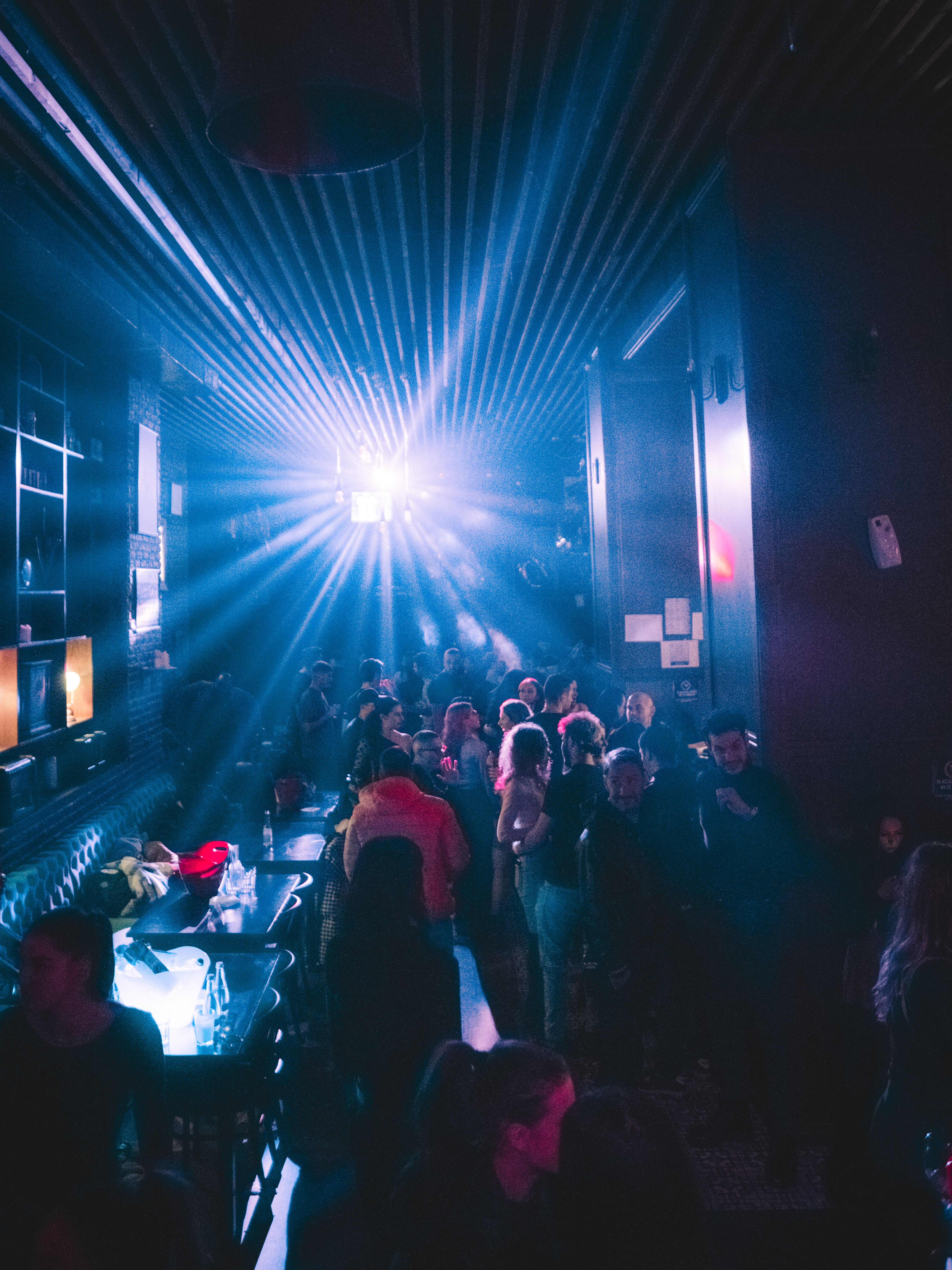
Then the bass drops, and the city’s heart shifts. Nightlife sanctuaries rise, each with its own ritual and risk. There’s the sterile sheen of mainstream clubs—bright, loud, transactional—where the energy is efficient and the flirtation often gets lost in the noise. And then there are the real high-energy spaces, where the basement floors sweat under the weight of a thousand stories and a single track can tilt a date from “this is interesting” to “this is everything you didn’t know you needed.”
In the sweating basement you feel the air vibrate with intention: the footwork of someone leaning in, the whisper of a compliment traded over a drum solo, the electric hesitation before a conversation becomes a connection. In intimate listening bars, the energy is more clandestine—soundscapes drape you like a velvet curtain, and eye contact becomes a form of conversation that doesn’t need to shout. And in buzzing pub gardens, there’s a particular London flirtation in the open air—a conversation that lengthens as the night cools, a shared joke over a pint that feels like an agreement to keep the moment going just a little longer.
The stat sheet of the club: where you stand can determine how you move
There’s a strange, almost statistical romance to the floor. A friend mapped the night in numbers: front left on the floor—my personal favorite almost by instinct—averaging roughly 25.1K steps versus the back left’s 13.1K. Front center clocks in around 19.9K. If you’re standing in the sweet spot of the room, your tempo shifts. The floor becomes a feedback loop: the closer you are to the speakers, the more the rhythm becomes a part of you, and the more you lose track of time. It’s not just a dance; it’s a physics lesson in presence. The more you lean into the room, the more you participate in the night’s nervous system.
From the data: a city of motion and minutes
- A night out isn’t just a moment; it’s a movement: 984K total steps logged, almost a million and counting.
- 230 hours spent on the floor, as if the city’s energy is a second home for the body.
- 93K calories burned—a quiet rebellion against the sedentary life we tell ourselves we’re living.
- The heart rate spikes; a peak of 181 bpm recorded at a Gray Area event at Knockdown Center—a reminder that when the moment hits, the body answers in real time.
- The biggest single night: around 41K steps, the kind of night that makes the sunrise feel like it owes you a favor.
- 125 unique artists, with techno (36%) and house (25%) taking the longest walk with us.
These numbers aren’t trophies; they’re coordinates. They map the jagged charm of London’s after-hours, where the thrill of a new track rubs shoulders with the ache of running on adrenaline until the first light shows up and you’re still thinking about the person you nearly spoke to versus the one you did. The data is a nerdy confession: the night is louder when you’re moving with it.
The Resolution: is London nightlife getting sterile and overpriced, or is the city’s social spark still stubbornly alive?
Is the city losing its edge to the cashmere-gloss of curated experiences and name-brand bottle service? There’s truth to the sting: drink prices that feel like a dare, door policies that could pass as security theatre, and venue closures that feel like the city is tightening its corset around its own nightlife. It’s easy to romanticise a basement where the floor sticks with the romance of a thousand first looks and the promise of a late-night conversation that starts with a shared line and ends with a genuine connection.
But the counterpoint is the living, breathing resilience of London’s nocturnal culture. The late-night kebab window that somehow becomes a sanctuary after a show. The tiny, unglamorous natural wine bar in a side street where the conversation finds an unguarded rhythm and you feel seen—not like a profile to be swiped, but a person to be known, if only for an hour. The warehouse raves that pulse through the night like a heartbeat you can’t ignore, where the room’s steam and the floor’s grit feel like a shared secret. And yes, even in the most expensive corners, there are moments of flirtation that cut through the fakeness with a single, piercing glance and a laugh that travels faster than a DM.
London’s nocturnal heartbeat isn’t dying; it’s evolving. It’s learning how to be money-aware without losing edge, how to flirt beyond the screen, how to stand front left and still feel the thrill of the room. The city’s social spirit isn’t a fragile thing to be protected; it’s a stubborn flame that keeps finding a way to flicker back to life, even when the wind from a price tag and a new ban rule tries to snuff it.
So where do you stand?
Front left, front center, back left—where your body is in the room can change the way the night moves through you. The best nights are the ones where you let the room choose you, where you give the dance the permission to rewrite your night’s plan. The best nights are the ones where a stray laugh across a crowded bar becomes a plan to meet again, where a glance becomes a conversation that becomes a memory. The city rewards those who remain curious, who keep their wits about them, and who show up for the conversation as much as the beat.
London, in all its electric mess, still rewards the brave: the brave who order the street-food dumplings at 2 AM, the brave who strike up a conversation in a dimly lit pub garden, the brave who move with the floor and let the floor move with them. If the night is a test, the city hasn’t just passed—it’s rewritten the test to favour the brave, the curious, and the relentless.
And if you need a quick map for the next outing:
– Start with a bite: east or central for a pre-game chill that’s still sharp with possibility.
– Move to the floor that invites conversation—and a little push on the tempo: a basement if you’re chasing intensity, a listening bar if you’re chasing a quiet resonance, a pub garden if you want air and a spark that travels.
– End with a moment that feels earned: a final glance, a shared signal, an alignment with someone who feels like the city’s answer to your best questions.
The night isn’t over just because the clock hits last call. In London, the afterglow is where plans often begin. The city’s romance is not a one-night stand; it’s a marathon of tiny, perfect, human moments that remind you: you’re part of something bigger than your own heartbeat. And that, somehow, is the true magic of this place—the way it makes you move, even when you didn’t know you wanted to.
0 Comment